30 Days Of Testing - 30 Challenges over 30 Days!

I've decided to attempt to do the Ministry Of Testings 30 Days of Testing Challenges over the month of July, which will be erm... challenging! (duh!)

For those that don't know what it is, you can read about it here and the challenges are below:


The first challenge is to read a Testing Book, the book I've chosen is "Dear Evil Tester" by the one and only Alan Richardson. So I will start reading that on Friday and then take it from there!

I'll try and write some posts that will update, but if you're reading this, and it sounds interesting to you, then my advice to you is to do it! It's only 30 days, you'll learn loads of stuff and it's fun!

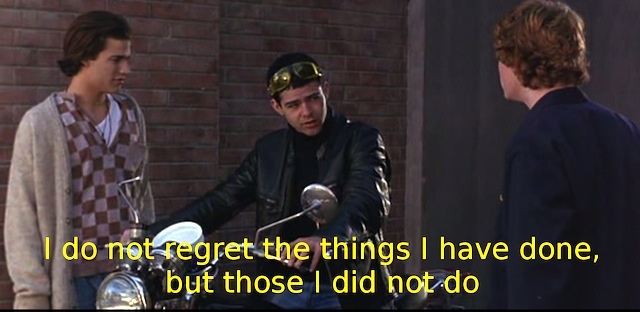
Remember, a quote from Empire Records, "I do not regret the things I have done, but those I did not do"


Comments

  1. This looks like a fun thing to do but does one have to be a tech savvy to do it? Or can amateur and lay man also participate in the 30 day challenge. I am sure one will learn a lot from such activities.

    ReplyDelete

Post a Comment

Popular posts from this blog

Treating Test Code as Production Code

It's important when writing automated tests to remember that the code you write should be up to production standards, meaning any conventions that you have in place should be adhered to and that it should follow good design patterns. Too many people often say why does it have to be as good as production code, it's "Only" a test, so long as it passes then that's fine... To answer this we need to look at why we want our tests to be written in such a structured and efficient manner: - Maintainability - by making the test code structured and efficient, it becomes far easier to maintain and in doing so changes in the future can happen quickly as the test isn't linked to anything that it shouldn't be and it's easy to understand for a new set of eyes. - Durability - Again by making the tests structured they should be resistant to changes, if you change a variable name for instance then it shouldn't effect the unit test unless it absolutely has to....

Testers: Be more like a Super-Villain!

Who doesn't love a Super Hero? Talk to my son, and he'll tell you how much he loves them, talk to many adults and they'll say the same! Deep down, we all love to be the Super Hero, we all want to save the day! However, I want to talk about the flip side of Super Heroes, the Super Villains... I often play Imaginext with my son, and I (unfortunately?) am nearly always the Super Villain! Be it Lex Luthor, Joker, Two Face, Mr Freeze or The Riddler! These are all great characters and great Super Villains, but why would I want to write about Super Villains? A while ago where I worked, we had a few Super Heroes, people who would be able to come in and "fix" things that had broken and help deliver projects on time. We then shifted, we decided to do away with the Super Hero culture and try and prevent from being in that position in the first place, whilst we didn't go as far as wanting to hire Super Villains, it's definitely a story that has stuck with me and t...

Using BDD and gherkinising your Acceptance Tests

In my post Testing of Automated tests , I mention about a BDD framework which involves using BDD to drive your acceptance tests. BDD stands for Behaviour Driven Development.  One effective method of writing BDD tests are by using a format known as Gherkin language. These consist of Given, When, Thens. The main advantage of the gherkin language is that it's readable by the business, and in an ideal world forms part of the Conditions of Acceptance around a PBI. Also, using a Visual Studio plugin of SpecFlow , you can integrate your Gherkinised COAs into your solution with feature files, and then drive the automated tests, however, for this post I will focus solely on how to effectively gherkinise your acceptance tests. A Feature file consists of a feature outline, which details what the feature file is testing followed by Scenarios and examples (parameters).  The BDD scenarios are made up of a Given, When, Then... These are effectively an initial state (Given), an action (W...